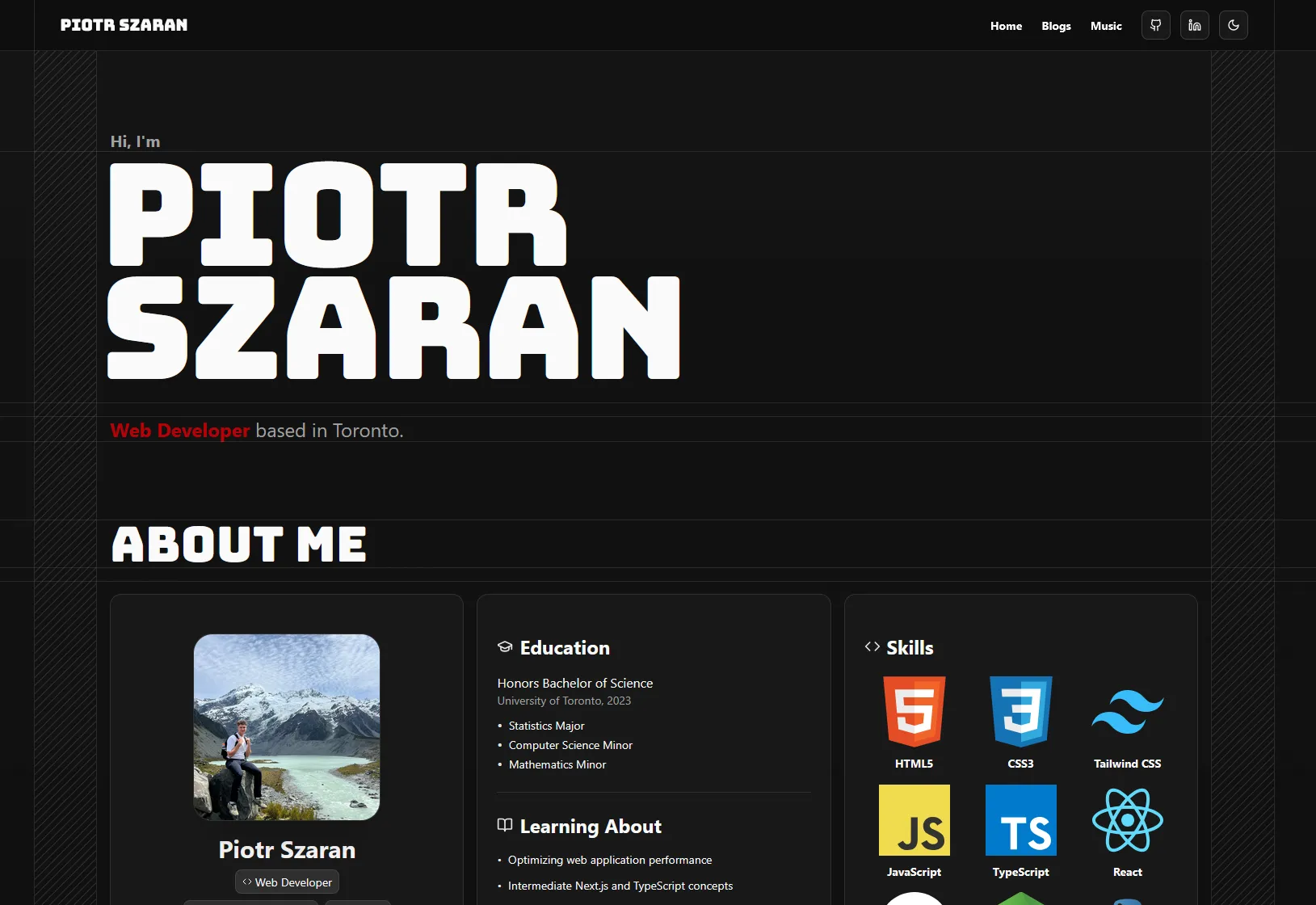
My personal website started as a place to collect my projects and share a bit about my work. Over time, though, it became something more important to me. I wanted it to feel like a real reflection of how I think as a developer - not just what I build, but how I present it, document it, and maintain it.
This version of the site was a turning point. Earlier projects were mostly about building things. This one was also about presenting my work properly and creating a space that could grow with me over time.
What I Wanted the Site to Do
I needed the site to do more than act as a static portfolio. I wanted one place to showcase personal projects, freelance work, and my growth as a developer. I also wanted it to become the home for my blog posts, giving me a way to explain my work in more depth instead of only showing the finished result.
At the same time, I wanted to avoid manually hardcoding every update. The goal was to build something flexible, polished, and easier to maintain as new content was added.
Why the Project Mattered
By the time I started this version, I already had a few projects completed and needed a better way to present them. I was also starting to think more seriously about how I showed up online. I wanted the site to feel more intentional and professional than a simple portfolio.
That made this project different. It was not just about building pages - it was about building a platform for my work.
Technologies and Approach
This was also my first time introducing PayloadCMS into a personal project. That changed the way I thought about content management. Instead of tying everything directly to the frontend, I could structure content in a way that made the site easier to update and grow over time.
On the frontend, Tailwind played a big role in shaping the design. I liked its clean spacing, typography, and overall sense of polish. It helped me create something modern and readable without overcomplicating the styling.
Each tool had a purpose. PayloadCMS made content easier to manage, and Tailwind helped create a cleaner, more professional user experience.
Design Thinking
A lot of the design inspiration came from Tailwind’s own website. I liked how clean and modern it felt, and I wanted to bring some of that same clarity into my own site.
Since the website would also hold blog posts, readability mattered a lot. I wanted visitors to quickly understand who I am, what I build, and where to explore next. That made me think more carefully about layout, spacing, and content hierarchy, not just the code itself.
Challenges and Tradeoffs
One of the biggest challenges was deciding how dynamic the site really needed to be. Adding a CMS to a personal project brings more flexibility, but it also adds complexity. I had to balance wanting a polished, scalable site with the risk of overengineering something personal.
That tradeoff shaped a lot of decisions throughout the build. I wanted the site to feel thoughtful and maintainable, but I also wanted to keep it practical and ship it.
What I Learned
This project taught me that a personal website is more than just a portfolio - it is a product. It has to communicate clearly, feel polished, and be easy to maintain.
I also learned how valuable a CMS can be, even on a personal site, and how much design affects the way work is perceived. More than anything, I realized that writing about projects is just as important as building them, because it helps communicate the thinking behind the work.
What I’d Improve Next
If I were revisiting the project, I would spend more time refining the CMS structure, improving SEO, and strengthening the copy throughout the site. I would also like to push the case study side of the website further so each project tells a stronger story.
Final Thoughts
This project was the point where my personal website became more than a place to list projects. It became a real home for my work, my writing, and my growth as a developer.
It reminded me that building the project is only part of the job. Presenting it well matters too.